DealsRky Editorial
Ultrasonic Mouse Repellent with LED Light: A Practical Buyer's Guide
This guide walks through what to consider before buying an ultrasonic mouse repellent with LED light and three operating modes, helping you decide whether it fits your indoor pest-control needs.
If you have ever dealt with unwanted mice in your home, you know how frustrating it can be to find droppings in the pantry, hear scratching in the walls at night, or worry about the health risks that come with a rodent infestation. Traditional traps work, but they require handling, regular checking, and constant bait replacement. Chemical solutions raise their own concerns, especially in households with children or pets. Ultrasonic mouse repellents offer a different approach. These devices emit high-frequency sound waves that are designed to make mice uncomfortable without harming humans or animals, giving you a hands-off way to discourage rodent activity in living spaces, basements, garages, and similar areas.
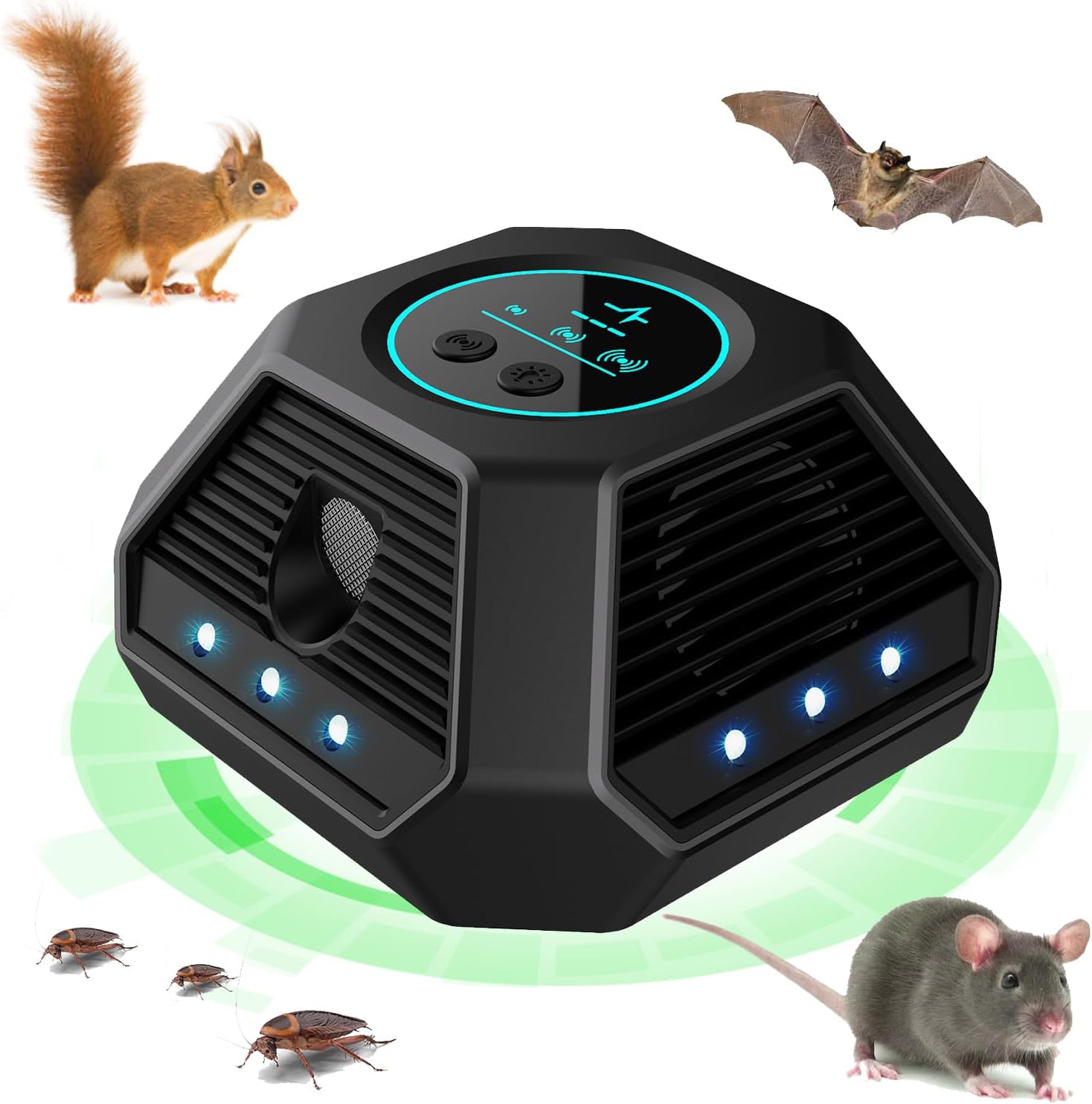
The product in question here combines ultrasonic technology with an LED light feature and three distinct operating modes. The idea is straightforward: emit sound waves at frequencies mice find unpleasant, use a flashing LED as an additional visual deterrent, and let the user switch between modes depending on the severity of the problem or the size of the area being covered. The device is marketed for use in homes, apartments, cellars, restaurants, attics, and garages, making it a versatile option for both residential and light commercial settings.
Who This Product Fits
This type of device appeals most to people who want a simple, low-maintenance way to address mouse problems without relying on traps, poisons, or professional exterminators. It works well for renters who cannot make permanent modifications to a property, or for homeowners who prefer to try a non-lethal approach before escalating to more intensive measures.
It also suits environments where hygiene and safety are priorities. Kitchens, pantries, and food-storage areas benefit from a solution that does not involve chemicals that could accidentally contaminate food supplies. Families with small children or pets that might investigate traditional snap traps often find ultrasonic options more comfortable to live with day to day.
That said, this product is best treated as a deterrent rather than a guaranteed solution for established infestations. If you already have a significant mouse population nesting inside your walls, a single plug-in device may not be enough on its own. In those cases, it works better as part of a broader strategy that includes sealing entry points and removing attractants.
What to Look For
When evaluating any ultrasonic rodent repellent, a handful of features deserve close attention.
Frequency range and variability. Effective repellents typically operate between roughly 20,000 Hz and 65,000 Hz. Some models emit a single fixed frequency, while others cycle through a range of frequencies. Variable frequencies tend to be more effective over time because mice are less likely to simply adapt and ignore a sound that keeps changing.
Coverage area. Manufacturers usually list a maximum square footage, but this figure is often calculated under ideal lab conditions with no furniture, walls, or soft furnishings to absorb the sound. Real-world coverage is typically smaller. For a typical apartment or single room, a device rated for 800 to 1,200 square feet may be sufficient. Larger spaces or multi-room layouts may require multiple units.
Operating modes. The three-mode design on this product gives you flexibility to adjust the intensity. Lower settings work well for routine prevention, while higher settings can be activated when you notice increased activity or want to cover a larger area more aggressively.
Power source and energy use. Most plug-in models run continuously. Check the wattage to estimate ongoing electricity costs. A device that runs around the clock will use more energy than one that cycles on and off automatically.
LED light feature. The built-in LED adds a visual element to the deterrent effect. While mice rely primarily on smell and sound rather than sight, a sudden flashing light in a dark corner or along a wall can still contribute to an unwelcoming environment.
Practical Buying Considerations
Before you finalize your decision, a few practical details are worth reviewing.
Room layout matters. Open-plan spaces with fewer obstructions allow ultrasonic waves to travel more freely. In contrast, rooms divided by walls, heavy furniture, or closed doors create barriers that reduce effective coverage. Soft furnishings such as carpets, curtains, and upholstered furniture tend to absorb sound, further limiting range.
Placement strategy. Positioning the device in a corner is generally more effective than placing it in the center of a room, because the sound waves can reflect off walls and fill the space more evenly. Aim the device toward areas where mice are most likely to travel, such as near entry doors, utility openings, or along baseboards.
Realistic expectations. Ultrasonic repellents do not work instantly. It can take two to four weeks for mice to relocate entirely. During this period, you may still see occasional activity as the animals search for a way out. Patience is key.
Compatibility with other methods. For best results, combine the repellent with basic exclusion tactics. Seal cracks in foundations, install door sweeps, block utility line entry points, and store food in airtight containers. Removing food sources and entry opportunities makes the ultrasonic deterrent far more effective.
Verify current details on Amazon. Prices, shipping options, and product availability can change. Before buying, take a moment to check the listing for the most up-to-date information, including whether the product ships separately or as part of a bundle.
Related Picks
If you are building out a home-protection setup, a few other categories may complement an ultrasonic repellent strategy.
Surveillance cameras. A compact indoor camera can help you monitor activity in corners, basements, or storage areas where mice are most likely to appear. Knowing where traffic patterns exist can guide where you place repellents.
USB chargers and power accessories. Many plug-in repellent devices run continuously. A reliable USB charger with enough ports can keep your repellent, camera, and other devices powered without crowding your outlets.
These options are not directly tied to pest control, but they address the practical side of running continuous electronic devices in your home.
Conclusion
An ultrasonic mouse repellent with LED light and multiple operating modes can be a practical addition to your home pest-prevention toolkit, particularly if you prefer a chemical-free, hands-off approach. It is best suited for early-stage infestations, routine prevention, and environments where safety and cleanliness are top priorities. The three-mode flexibility gives you room to adjust based on your needs, and the LED feature adds a visual element that supports the overall deterrent strategy.
No single device will solve every mouse problem, but this type of product works well as part of a broader plan that includes sealing entry points, removing attractants, and maintaining a clean living space. If you are ready to try a straightforward, plug-and-use solution, checking the current price and details on Amazon is the next practical step.
Browse more smart picks
Continue exploring our curated deal pages and product breakdowns for more practical buying guidance.
More US buying guides
These articles are prioritized for shoppers browsing from the same marketplace region.