DealsRky Editorial
Automatic Chicken Coop Door: A Practical Buyer's Guide for Everyday Flock Care
Choosing an automatic chicken coop door involves more than convenience. This guide walks through what actually matters—solar reliability, sensor accuracy, weather sealing, and safety features—so you can pick...
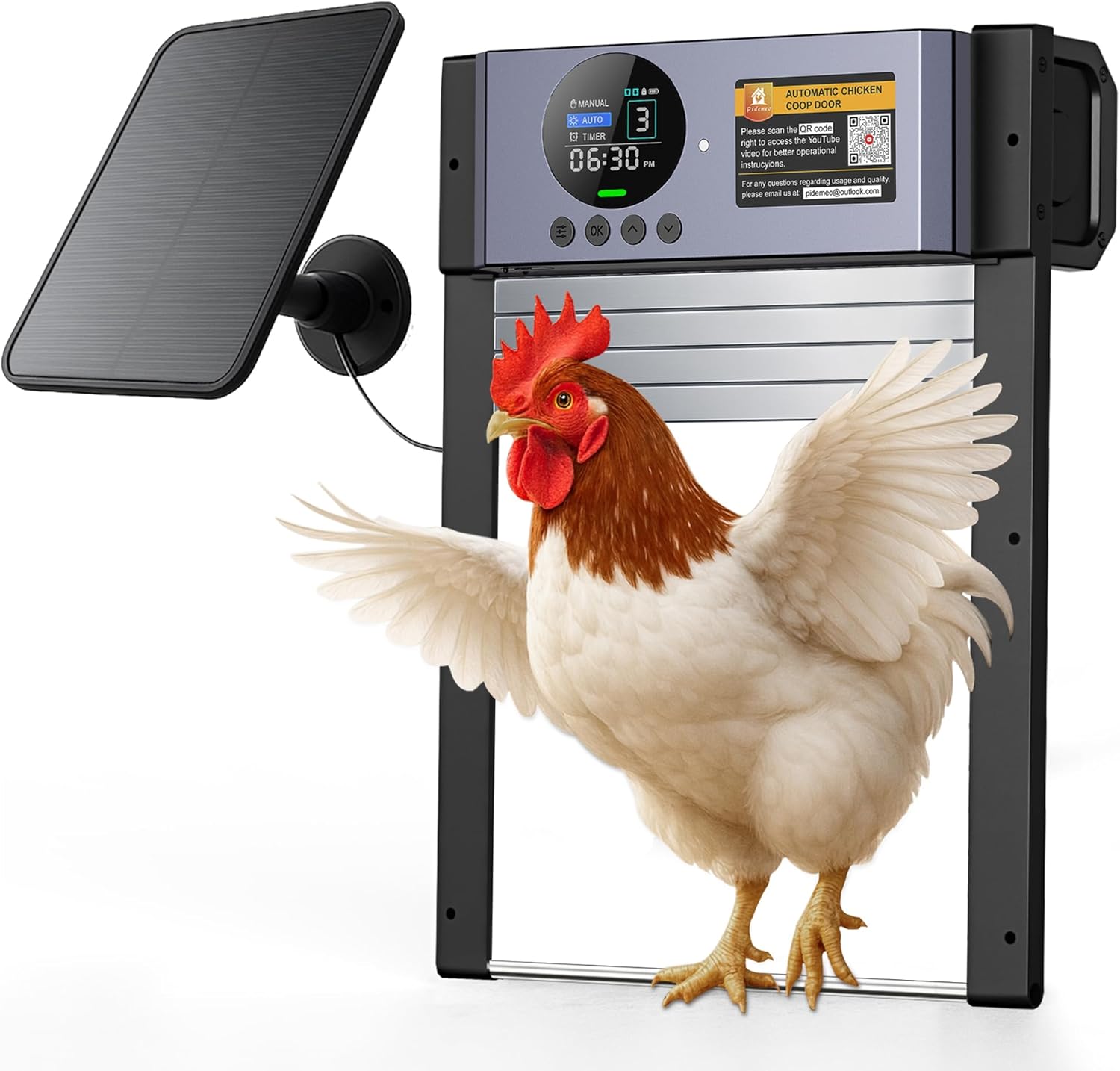
Managing a chicken coop takes time, and for many people, that time doesn't always align with sunrise and sunset. An automatic chicken coop door solves that friction by handling one of the most consistent daily tasks so you don't have to. Whether you're heading to work early or just want the flexibility to step away without worrying about your flock, automation adds a layer of reliability that manual checks simply can't match.
This guide focuses on the practical factors that actually matter when evaluating these systems. We'll look at how they work, what features tend to hold up in real conditions, and how to figure out whether a particular model fits your coop setup and daily routine.
Who an Automatic Chicken Coop Door Benefits Most
These systems aren't for everyone, and that's worth acknowledging upfront. If you have a small flock and you're home most days, you might not need automation at all. But for anyone juggling work schedules, weekend getaways, or simply wanting to reduce the daily chore of checking the coop, an automatic door changes the routine.
Backyard keepers with larger flocks often find manual opening and closing becomes a bottleneck, especially during winter when daylight hours are short and predators are more active. Automated doors also help maintain more consistent schedules for the birds themselves, which can improve egg production and overall flock health over time.
If you've been relying on timers or manual latches but find yourself forgetting or adjusting constantly, an automated system with built-in light sensors removes that mental load. The door responds to actual daylight rather than an arbitrary clock, which aligns better with the birds' natural rhythms.
Key Features Worth Evaluating
Understanding what separates a reliable automatic door from a frustrating one comes down to a few practical categories.
Solar Power and Energy Reliability
Solar-powered models eliminate the need for wiring and outlet access, which is a significant advantage for coops positioned away from structures. However, not all solar setups perform equally. The panel size, battery capacity, and charging efficiency determine whether the door operates consistently through cloudy periods or multiple overcast days.
Look for systems that specify solar panel wattage and battery storage. A model with a larger battery can bridge gaps during poor weather, while smaller capacities may leave you manually intervening more often than expected.
Light Sensor Accuracy
The light sensor is what makes these doors intelligent rather than just automatic. Instead of running on a fixed timer that doesn't account for seasonal daylight changes, sensor-based systems respond to actual ambient light levels. This means the door opens earlier in summer and later in winter without any adjustment from you.
The sensitivity and calibration of the sensor matter. Some models let you adjust the light threshold, which is useful if your coop sits in a location where shadows or nearby lighting could trigger false signals. A adjustable sensitivity setting gives you more control without requiring technical know-how.
Timer and Manual Override Options
Even with reliable sensors, having backup control matters. Timer modes let you set specific opening and closing windows if you prefer predictability over light-based triggers. Manual modes give you direct control when needed—perhaps during extreme weather or when you're working with the flock and want the door held open.
The combination of light sensor, timer, and manual modes covers more scenarios than any single mode alone. When evaluating options, check how easily you can switch between modes and whether the current setting is clearly visible on the control interface.
Anti-Pinch and Safety Mechanisms
This is where design philosophy diverges significantly. Some doors use simple gravity or single-motor systems that can injure birds if the door closes while they're partially through the opening. Dual anti-pinch mechanisms typically reverse direction or stop when they detect resistance, protecting birds from injury and preventing damage to the door itself.
If you have young chicks, smaller breeds, or birds that tend to linger near the door, safety reversal isn't optional—it's essential. Check how the manufacturer describes the anti-pinch behavior and whether it's been tested in real scenarios rather than just marketed as a feature.
Weatherproofing and Durability
Coops face rain, snow, humidity, dust, and temperature extremes. The door mechanism and control housing need to handle these conditions without corroding, freezing, or malfunctioning. IPX ratings give you concrete information about water and dust resistance, though not all manufacturers specify these clearly.
Look for models with sealed motors, corrosion-resistant hardware, and operating temperature ranges that match your local climate. If you're in an area with harsh winters, verify that the door mechanism won't freeze or become sluggish when temperatures drop significantly.
Installation Considerations Before You Buy
Measure your coop door opening before shopping. Automatic doors come in various sizes, and choosing one that fits your current opening without modification simplifies installation considerably. Some models require specific clearance around the frame, so check the dimensional requirements against your coop's construction.
Consider where you'll mount the solar panel relative to the door mechanism. Panel placement affects charging efficiency—south-facing installations in the Northern Hemisphere typically receive more consistent sunlight, but if your coop sits under trees or near structures that cast shadows, you may need to extend the panel on a mount.
The mounting surface matters too. Some doors work better mounted to wood frames, while others can attach to metal or composite materials. If you're retrofitting an existing coop, verify that your current frame can support the door's weight and operation forces.
What You Can Reasonably Expect
Automatic chicken coop doors reduce daily tasks and add consistency, but they aren't maintenance-free. The solar panel will need occasional cleaning, especially after dust storms or heavy rain that leaves residue. The door track should stay clear of debris, feathers, and ice buildup that could impede smooth operation.
Battery performance will degrade over time—typically years, but this varies by usage and climate. Eventually, replacement becomes necessary, and how easy that process is depends on the product design. Check whether batteries are user-replaceable or require professional service.
Mechanical parts like motors and gears experience wear, though quality models handle thousands of cycles without major issues. Reading about others' experiences with specific models gives you a realistic sense of longevity expectations.
Matching to Your Situation
If your coop sits far from power sources, solar isn't just convenient—it's often the only practical option. If you travel frequently or have unpredictable schedules, the combination of light sensor and timer modes gives you flexibility without constant manual attention. If you live in an area with extreme heat or cold, verify the operating temperature range matches your conditions.
For most buyers, the decision comes down to how much friction the current routine creates and whether the investment removes enough friction to justify the cost. These systems don't change flock dynamics or egg production directly, but they remove a daily dependency that many keepers find constraining.
Related Products to Consider
If you're setting up or upgrading your coop, a few complementary products can improve the overall system.
A portable electric fence helps protect free-ranging birds from predators during daytime hours. Combined with an automatic coop door, you get protection around the clock without requiring your constant presence.
An outdoor solar light near the coop provides additional visibility for checking on birds after dark and can serve as a backup light source that prevents the door sensor from being confused by nearby artificial lighting.
Heavy-duty hardware cloth reinforces vulnerable coop sections against predators. Even the best automatic door means little if raccoons or foxes can tear through another part of the enclosure.
Final Thoughts
An automatic chicken coop door works best when it matches your specific setup and expectations. Solar reliability, sensor accuracy, safety mechanisms, and weather resistance form the foundation of a model that performs consistently rather than one that requires constant babysitting.
Before purchasing, measure your door opening, assess your sunlight availability for the solar panel, and consider whether the safety features address your flock's specific needs. Taking these steps reduces the chance of installation complications or mismatched expectations.
Always verify current pricing, shipping availability, and complete product specifications on Amazon before completing your purchase. Details and offers change regularly, and checking directly ensures you have the most accurate information before deciding.
Browse more smart picks
Continue exploring our curated deal pages and product breakdowns for more practical buying guidance.
More US buying guides
These articles are prioritized for shoppers browsing from the same marketplace region.